Juliane Koepcke: The Girl Who Fell From the Sky
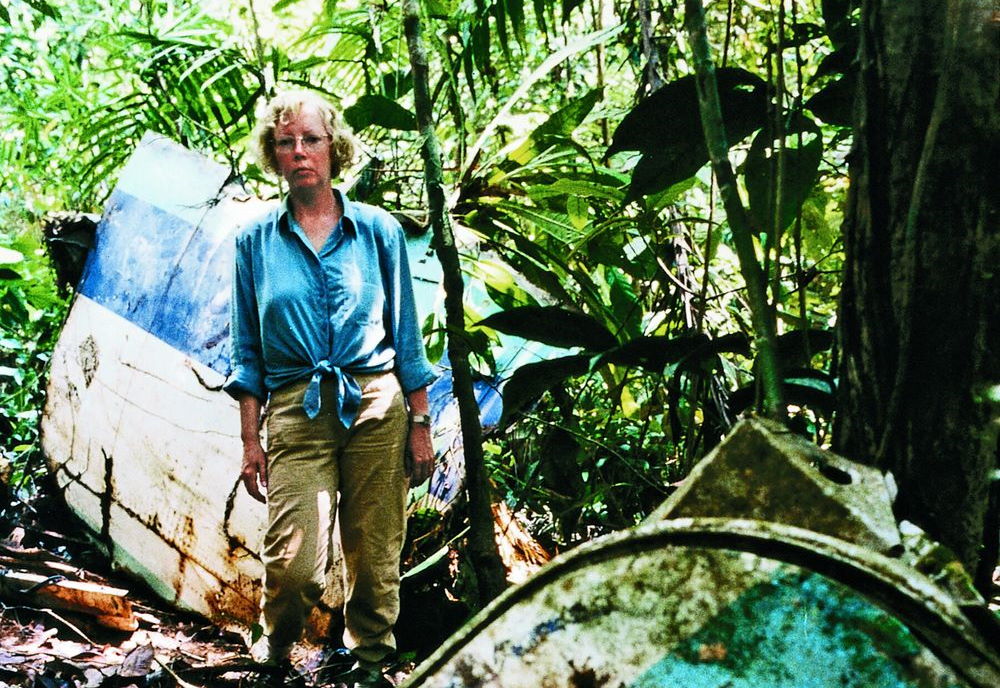
Juliane Koepcke fell two miles from the sky while still strapped to her airplane seat. She hit the dense canopy of the Peruvian rainforest, woke up alone in the mud, and walked out alive eleven days later. She was only seventeen years old.
Most people call it a miracle, but raw biology and a cool head saved her life. On Christmas Eve in 1971, her flight broke apart in a violent thunderstorm, and she used basic forest rules taught by her parents to find safety. Here is how a teenager survived a fall from 10,000 feet and conquered one of the wildest jungles on Earth.
What Happened to LANSA Flight 508 in the Storm?
It was December 24, 1971. Juliane and her mother, Maria Koepcke, boarded LANSA Flight 508 in Lima, Peru. They wanted to fly to Pucallpa to meet Juliane's father, Hans-Wilhelm Koepcke, for Christmas. Both of her parents were famous German zoologists who ran a research station called Panguana deep in the Amazon basin.
The Lockheed L-188A Electra turboprop took off into clear air, but soon hit heavy turbulence. Thick, black clouds surrounded the plane. Flashes of lightning lit up the windows. Packages and gifts tumbled from the overhead bins, bouncing off the ceiling. Passengers screamed and wept as the plane dropped in sudden, sickening plunges.
Juliane sat by the window in row 19, holding her mother's hand. Maria turned to her and said quietly, "This is the end, it's all over." A bright flash of white light struck the right wing, igniting the fuel tank. The plane snapped in two. The loud roaring noise stopped, replaced by a terrifying silence and the rushing wind. Juliane was spinning through the cold air, strapped to a row of three empty passenger seats.

How Did Juliane Koepcke Survive a Two-Mile Fall?
Falling from about 10,000 feet should have ended her life instantly. Yet when Juliane opened her eyes, it was morning. Sunlight filtered through the jungle leaves above her. She had a severe concussion, a broken collarbone, deep cuts on her arms and legs, and a swollen eye that she could not open. Her glasses were gone, leaving her nearly blind in the woods.
Scientists and crash investigators later tried to explain how she lived. The row of three seats acted like a tiny parachute or a glider, spinning and slowing her fall down to Earth. Strong updrafts from the massive thundercloud pushed against the seats as they fell. When she reached the trees, thick jungle vines and dense tree crowns caught the seat frame, absorbing the shock before she hit the muddy ground.
Juliane spent the first day drifting in and out of consciousness. When she woke up fully, she called out for her mother. Only the strange calls of jungle birds and buzzing insects answered her. She found a small bag of hard candies in the wreckage near her feet. That candy would be her only food for the next eleven days.
The Forest Rules That Kept Her Moving
Juliane did not panic because she knew the jungle well. She had lived with her parents at Panguana for two full years, learning how the forest worked. Her father had given her a key piece of advice: if you are ever lost, find water. A trickle leads to a stream, a stream feeds a river, and a river leads to civilization.
She dragged herself through the bushes until she found a tiny spring trickling over wet stones. She followed it step by step. Her broken collarbone throbbed, and her swollen eye made every step tricky. The damp ground hid thick roots and sudden drops, but she kept moving along the water.
She remembered her basic Survival skills and stayed in the water whenever she could. Walking on riverbanks was dangerous because venomous snakes liked to hide under dry leaves. Deep water brought other threats, like stingrays buried in the sand. Juliane poked the riverbed ahead with a stick before taking every single step. In many ways, her calm courage reminds me of other legendary survivors, like Tsutomu Yamaguchi: The Man Who Survived Two Atomic Bombs, who also relied on quick wits and sheer determination during impossible odds.
Ten Days Alone in the Perilous Jungle
By the fourth day, the stream joined a wider river. The water was waist-deep, so Juliane floated on her back to save energy. Floating kept her away from piranhas, which rarely attack healthy swimmers, but caimans watched her from the muddy banks. Juliane was not afraid of them. Her father had taught her that black caimans do not usually hunt humans unless provoked.
The true nightmare came from tiny creatures. Cloud swarms of flies and mosquitoes stung her open wounds. Botfly larvae hatched under her skin, burrowing into the cuts on her arms. Her summer dress was ripped to shreds, and the hot sun scorched her shoulders during the day, while freezing rain kept her awake all night.
Search planes flew overhead, their engines rumbling across the valley. Juliane screamed and waved, but the forest canopy was far too thick. The pilots could not spot a lone girl under forty feet of leaves. When the engine sounds faded away, she knew no one was coming from the air. She was on her own, guided only by the river flow.
The Wooden Hut and the Maggot Wound
By day ten, Juliane could barely walk. Her candies were gone, her skin was covered in bites, and her arm had turned into an open, painful infection. As she drifted around a river bend, she spotted something that did not belong in nature: a small wooden boat tied to a tree, and a simple wooden hut on a high riverbank.
She climbed the steep bank on her hands and knees. The hut had no walls, just a roof made of palm fronds and a small outboard motor sitting on the ground. She collapsed on the wooden floor, too weak to keep going. She noticed a plastic canister filled with gasoline for the motor.
Her father had once used gasoline to clean fly larvae from their dog's skin. Juliane sucked some fuel into a tube, held her breath, and poured the gasoline directly into the deep wound on her arm. The pain was blinding. Over thirty maggots crawled out of her flesh, and she picked them out one by one with a stick before passing out on the wood floor.
How Was Juliane Koepcke Finally Rescued?
The next afternoon, Juliane heard voices. Three Peruvian loggers, Jeremias Pereyra, Marcelo Rocha, and Alaise Amasifuen, walked up the path to their hut. At first, they thought she was a water spirit from local myths because her skin was ghostly pale and her eyes were bloodshot. Juliane spoke to them in Spanish, telling them who she was and that she had fallen from the sky.
The men treated her cuts with salt and sugar water, gave her cooked manioc, and let her rest for the night. The following morning, they put her in their canoe and paddled downriver for seven hours until they reached the small logging town of Tournavista. A local pilot flew her to the hospital in Pucallpa, where she was finally reunited with her father.
Juliane was the sole survivor among the ninety-two passengers and crew members aboard Flight 508. Her rescue stands as one of the most unbelievable accounts of human endurance ever told. If you enjoy reading about incredible real events, our real life survival stories explore more people who beat impossible odds against nature.
Her story survived through decades of Oral history and books, inspiring films and survival courses around the world. Juliane later earned her doctorate in biology, just like her parents. She returned to the Amazon to lead the Panguana research station, protecting the very forest that spared her life.
What Kept Juliane Going When All Hope Was Lost?
Why did a seventeen-year-old schoolgirl survive when seasoned adults might have given up? She had no fancy gear, no knife, and no food. The difference was knowledge and calm acceptance. She did not treat the jungle as an enemy trying to kill her. Instead, she treated it as a system with natural rules.
She knew which fruits were poisonous, so she chose not to eat anything strange. She knew water always runs toward people, so she stayed in the stream. Most importantly, she never sat down to wait for death. Even when her body gave up, she floated with the current.
Nature is indifferent, but human willpower is stubborn. Next time you face a challenge that feels overwhelming, remember Juliane Koepcke floating down that murky brown river. What is the one small step you can take today to keep moving forward?


Comments
Post a Comment